.svg)

Google AI answers
Better answers, right in Google.
Google lets you choose the sites its answers come from. Choose ClearPoint, and you’ll see ours first.
One click. Only changes what you see — undo it anytime.

5 Quick Efficiency Wins!
- Report with a purpose: replace backward-looking status recaps with forward-looking recommendations so meetings drive decisions, not just updates.
- Manage overlapping reports at fiscal year-end by setting clear boundaries between current-year reporting and next-year planning to avoid mixed messages.
- Simplify the reporting calendar with regular windows and a defined rhythm, preventing late updates, missed deadlines, and rushed commentary.
- Declutter your strategy by archiving or deleting unused fields, goals, and measures so teams can focus on what truly matters.
- Align ownership with clear roles for each person in the reporting process, since shared-by-too-many ownership erodes accountability.
In our springtime ClearPoint Strategy webinar, co-founder Ted Jackson and I — Product Manager — shared five "spring cleaning" wins to help organizations streamline their strategy execution. These five easy-to-implement tips focus on improving reporting processes, reducing clutter, and ensuring ownership is clear.
Watch the Recording: "Spring Cleaning" Your Strategy
For the readers of the bunch: below is a breakdown of the 5 takeaways from the session. It's time to hit "refresh" on your strategy!
1. Report with a Purpose
One of the most common issues organizations face is reports that merely recap past performance without offering forward-looking recommendations. This often leads to meetings that are more about status updates and less about making decisions.

🫧 Shift the focus of your reports toward driving action. Include not only performance data, but also analysis and actionable recommendations for the future. By doing this, your team can come prepared to make decisions (rather than just reviewing past numbers).
In ClearPoint, reports can include a section for Analysis and Recommendations — and can even be powered by AI. This allows users to easily summarize past performance while suggesting future actions.
2. Manage Overlapping Reports
As fiscal years come to a close, organizations often struggle with overlapping reports for the current year and planning for the next. The confusion that arises from this overlap can lead to mixed messages and disorganization.

🧹 Clear boundaries between the current year's reports and next year's planning can help reduce confusion.
In ClearPoint, you can easily duplicate scorecards to track progress for both the current and upcoming years. This allows users to work on the new year's strategy without disrupting current reporting, maintaining clarity and continuity.
3. Simplify the Reporting Calendar
An unclear or non-existent reporting schedule can create chaos, resulting in late updates, missed deadlines, and rushed commentary.

🧼 Establish a clear and consistent reporting calendar. Set up regular reporting windows and define the rhythm for updates so your team knows what to expect and can plan accordingly.
ClearPoint makes it easy to set and manage reporting schedules. Administrators can create detailed workflows with a fixed reporting calendar, ensuring that updates are completed on time. Notifications and reminders are automated to keep everyone on-track.
Explore more ClearPoint collaboration features...
4. Declutter Your Strategy
Overcomplicated scorecards with extra fields and unused templates can create unnecessary noise, making it harder for teams to focus on what truly matters.

🧺 Clean up your scorecards by archiving or deleting unused fields, goals, or measures. Focus only on what’s important, so your team can engage with and update the right data that drives results.
ClearPoint offers the option to archive scorecards and custom fields. This declutters the interface and ensures only relevant information is visible to users.
5. Align Ownership
When ownership is shared among too many people, it can lead to confusion and lack of accountability. Clear ownership roles are critical for effective strategy execution.
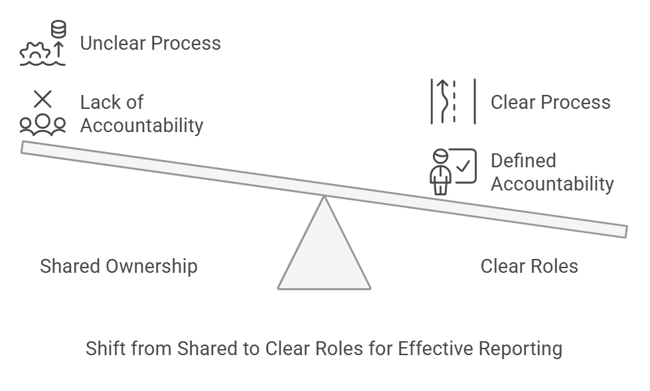
🧽 Clearly define roles for each person involved in the reporting process. This ensures that everyone knows their responsibilities, whether it’s data entry, analysis, or decision-making.
In ClearPoint, you can assign specific roles to users, such as Analysts or Collaborators, making it easy to track responsibilities and streamline communication.
Free eBook: Spring Cleaning Your Strategy Reporting
Spring cleaning your strategy isn’t just about tidying up reports, it’s about reducing friction, boosting focus, and ensuring that everyone knows their role in executing the plan. By following these five steps, you’ll be well on your way to simplifying your strategy management, setting your team up for long-term success, and creating a more effective, focused approach to achieving your organizational goals.
Happy Spring Cleaning!
Want to dive deeper into how ClearPoint can support your strategy execution? Schedule a call with our team of strategy experts!
Frequently Asked Questions
What does it mean to "spring clean" your strategy?
Spring cleaning your strategy means hitting refresh on how you report and execute, not just tidying up documents. It centers on five quick wins: reporting with purpose, managing overlapping reports, simplifying the reporting calendar, decluttering your strategy, and aligning ownership. The goal is reducing friction and sharpening focus.
How do I make reports more useful than status recaps?
Report with a purpose. A common issue is reports that merely recap past performance without offering forward-looking recommendations, which turns meetings into status updates rather than decision-making sessions. Shift the focus toward recommendations and next steps so each report actively helps leaders decide what to do, not just review what happened.
How do I handle overlapping reports at year-end?
As fiscal years close, organizations often juggle current-year reporting alongside next-year planning, and the overlap creates mixed messages and disorganization. The fix is to set clear boundaries between the two, so it stays obvious which information belongs to closing out this year and which belongs to planning the next.
Why does a reporting calendar matter?
An unclear or non-existent reporting schedule creates chaos: late updates, missed deadlines, and rushed commentary. Establishing a clear, consistent reporting calendar with regular reporting windows and a defined rhythm removes that uncertainty. Everyone knows when updates are due, which keeps reporting steady instead of scrambled.
How do I declutter an overcomplicated scorecard?
Overcomplicated scorecards with extra fields and unused templates create noise that makes it harder to focus on what matters. Clean them up by archiving or deleting unused fields, goals, or measures. Stripping away the clutter lets teams concentrate on the elements that genuinely drive strategy.
Why is clear ownership important for strategy execution?
When ownership is shared among too many people, it leads to confusion and a lack of accountability. Clear ownership roles are critical for effective execution. Defining who is responsible for each part of the reporting process ensures accountability is real, so work moves forward and nothing falls through the cracks.